
How Fink Built The City Is Coming To Erase It All
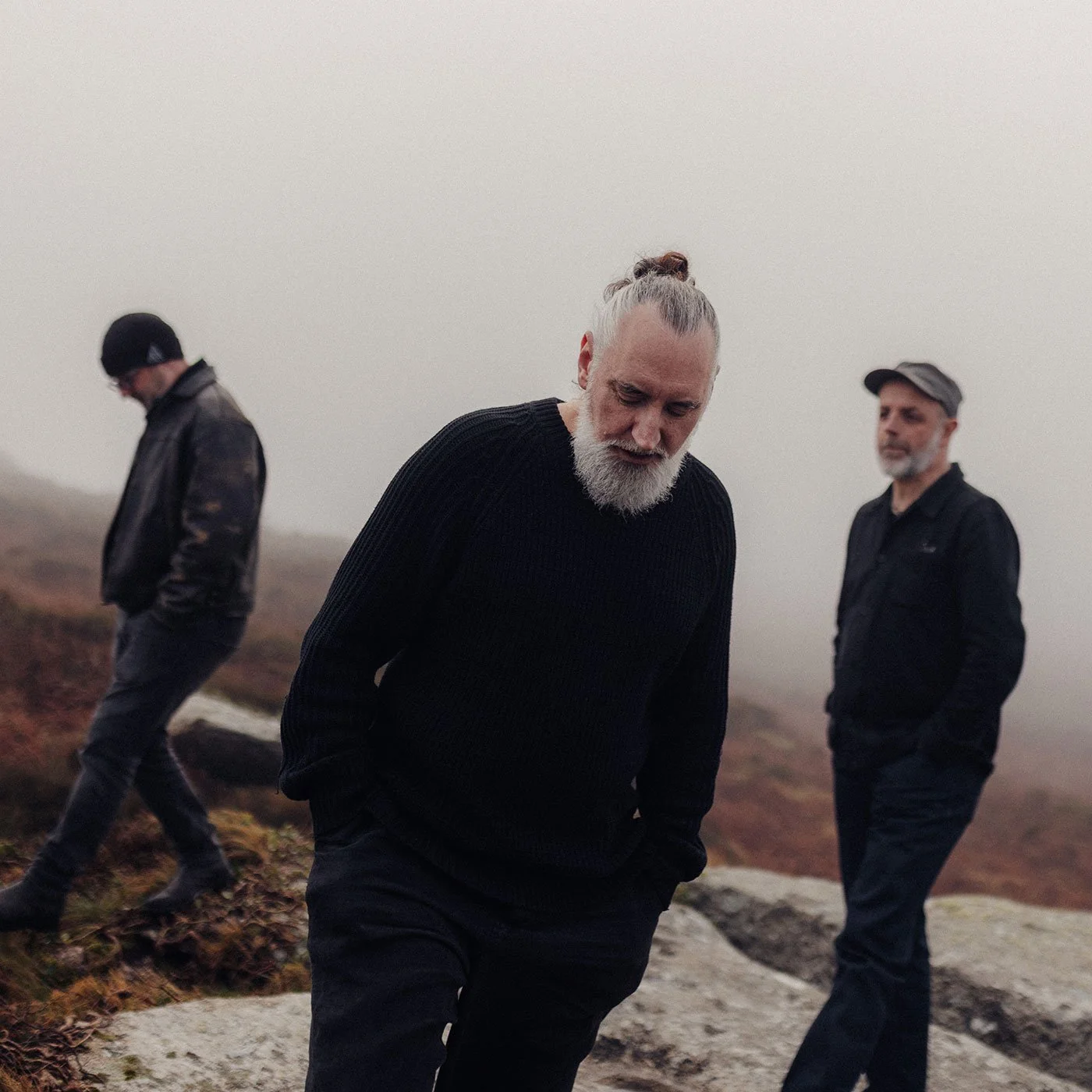
L-R: Guy Whittaker, Fin Greenall, Tim Thornton. Photography: Tom Young.
For more than two decades, Fin Greenall – better known as Fink – has built a reputation for crafting deeply atmospheric songs that blur the lines between folk, blues, electronica and storytelling. We spoke with Fin about the making of The City Is Coming To Erase It All, the stories behind its songs, the influence of landscape and travel on his writing, and why curiosity remains at the heart of Fink's music.
Which song kicked off production, and how did it shape or influence the rest of the project?
Well, the first song we did was “Wishing for Blue Sky”, track one, side one, and that track was really influenced by a Michael Chapman record called Fully Qualified Survivor, particularly a track on that record called “Aviator”, which I was really obsessed with. It informed how I wrote the song, and it informed what elements we used to record it.
It's like early-'70s folk, but with a rocky, soulful edge, and it informed us. We wanted to make a record that was not like a time capsule or some kind of retro homage, but, working with Sam Okell down in Zennor, you get the opportunity to make something very authentic. So we were like, "Okay, we want it to be authentic, so no synths – nothing that couldn't have been on this Michael Chapman record." So 1974 was where we drew the line.
If we wanted to do some effect, then we had to think, "Well, how would they have done it in '74?" They wouldn't have used a plug-in, so they would have got a guitar pedal, rigged it up, re-amped it, and done all that bollocks – which we did to try and get this authentic sound. It's nine minutes long, so, with all the goodwill in the world, fuck it – it's nine minutes long. And if you don't like it by the end of it, then you're probably not going to like the rest of this record, and that's okay.
We wanted to make some kind of acoustic folk record, with meadows and maidens and all that folky stuff, but not necessarily when Timmy plays the drums. It was nice for Timmy to have a few templates, a few muses, to listen to. Even down to things like, "Where would we put the snare on this?" Because we didn't want it to sound like alternative indie from the 2010s. Therefore, your snare should go here and here, really.
We got quite analytical about it. At the same time, we were allowed to use things like prog, because there was a lot of prog around. We were allowed to use things like soul, because there was a lot of soul around. But we couldn't really reference indie, alternative indie, post-rock, post-punk, or anything like that – it hadn't happened yet. So that one stood us in really good stead. We did the rest of the record with that in mind. After we put down “Wishing for Blue Sky”, we also had our routine locked in, which was: I'd go for a swim in the sea in the morning before everyone was awake. I'd get back to the studio, put the fire on, warm up, and then I could deliver. So it kind of set up the template for the rest of the record.
What themes kept appearing while you were making this record?
Yeah, I'm working that out now, rehearsing it. I'm starting to recognise repeated themes – lyrics I didn't realise I'd used a bunch of times.
On the last record, Beauty in Your Wake, a journalist said on one of the promo trips, "There's a lot of questions on this record – loads of questions." And I thought, "Well, I'd never noticed that before. But yeah, you're right." There are absolutely tons of questions. And I think, weirdly, on this one, there are loads of answers. There's also a lot more nature. I'd say Cornwall itself has informed the writing of this record a lot more because I'm so in love with it at the moment. It's like my muse is being there. So there's a lot more nature. I'm much more grounded than I was in 2023. Fatherhood is a great grounder, and I'm getting into it and loving it.
I think all my records are the most honest thing I've ever done every time I finish one, but this one has a lot more nature, a lot more of me in the present, and a lot less overthinking. So I think, therefore, there are more answers. I'm working out what they are now. I really believe that, in my case, I write my songs very much from my subconscious. I try to channel feelings and stuff from the inside out, and I don't necessarily know what it all means until later. I'm so busy trying to surf the feeling at the time that I'm not analysing it. It's almost like I'm channelling messages from my future self in the present sometimes. Then, a couple of years later, I'll be rehearsing a track and I'll be like, "No way. That's what this is about. It's about this moment now. Wow."
My subconscious was projecting years into the future, going, "This is going to happen. This is what it's going to be about."
All of this gets revealed when you start rehearsing and getting ready to take it live. You start breaking your songs back down, learning them yourself, on your own, and instead of going, "Oh man, I just finished a great chorus. I think I really love it. What do you think, guys?" "Ah, yeah, cool." "Okay, great, let's work on that."
Now, in the rehearsal phase, the relationship is more about: How do you embody this moment with the most emotion? How do you pitch this the best? How do you give this song the most reverence? In doing that, you learn loads more about the song because you're no longer thinking, "Is it finished? Are we good? Is this bridge done? Are we going to do an intro? Is the outro too long?" All of those questions are sorted. Now you're thinking, "This is the song. How good can you make it?"
Then you can think about it, enjoy it, and love it – or not.
What new ways did you challenge yourself artistically?
Well, when you're trying to make a folk record, all of a sudden the song really has to survive on its own, because it's all about the song. So I challenged myself as a guitar player. I'm not a very technical guitar player, but fingerpicking is quite a technical pursuit, so I've really pushed the boat out. I've given myself a new instrument – a 12-string – which is really hard to play. So I'm really trying to get that under my belt at the moment.
And as a vocalist, I'm always trying to do something I'm not used to doing. Again, it's Bowie and his "If you're in your comfort zone, you're in the wrong place" mantra. I think that's great advice. I've always loved it. Every song I write, I want it to be really difficult for me to play and sing. That's a good sign. If it's easy, then it'll be ground I've already covered.
If it's really challenging and difficult – like “I Buried All the Answers” – that's exciting. It's a really difficult key. It's really easy to play on guitar, but it's really, really hard to sing. It's going to take practice to get it there, and that's the challenge. So those are the kinds of challenges – the technical aspects of it. Then you have to think, "Okay, I need this to be incredibly emotional, very real, and super transparent."
This is the ninth album, and I'm not afraid of judgement, being ignored, or being applauded. Whatever – it all feels pretty much the same to me now. I'm doing it for myself, really. I prefer applause to stunned silence, for sure. But I'm not really aware of the afterlife of this material when I'm writing and recording it. That's actually a skill you pick up the more you do it. The more albums you make, the less conscious you are of "I'm making a record that people are going to hear." You start moving past that, and then you can get quite free and quite creative. That's when the really interesting stuff starts to happen.
“One day it was playing in the kitchen, and my wife heard it, and she was like, “Wow, I love this. Why don’t you do a whole album like this?’ And I’m like, ‘Well, a whole album where I don’t sing, I’ll try not to be offended by that, but okay”
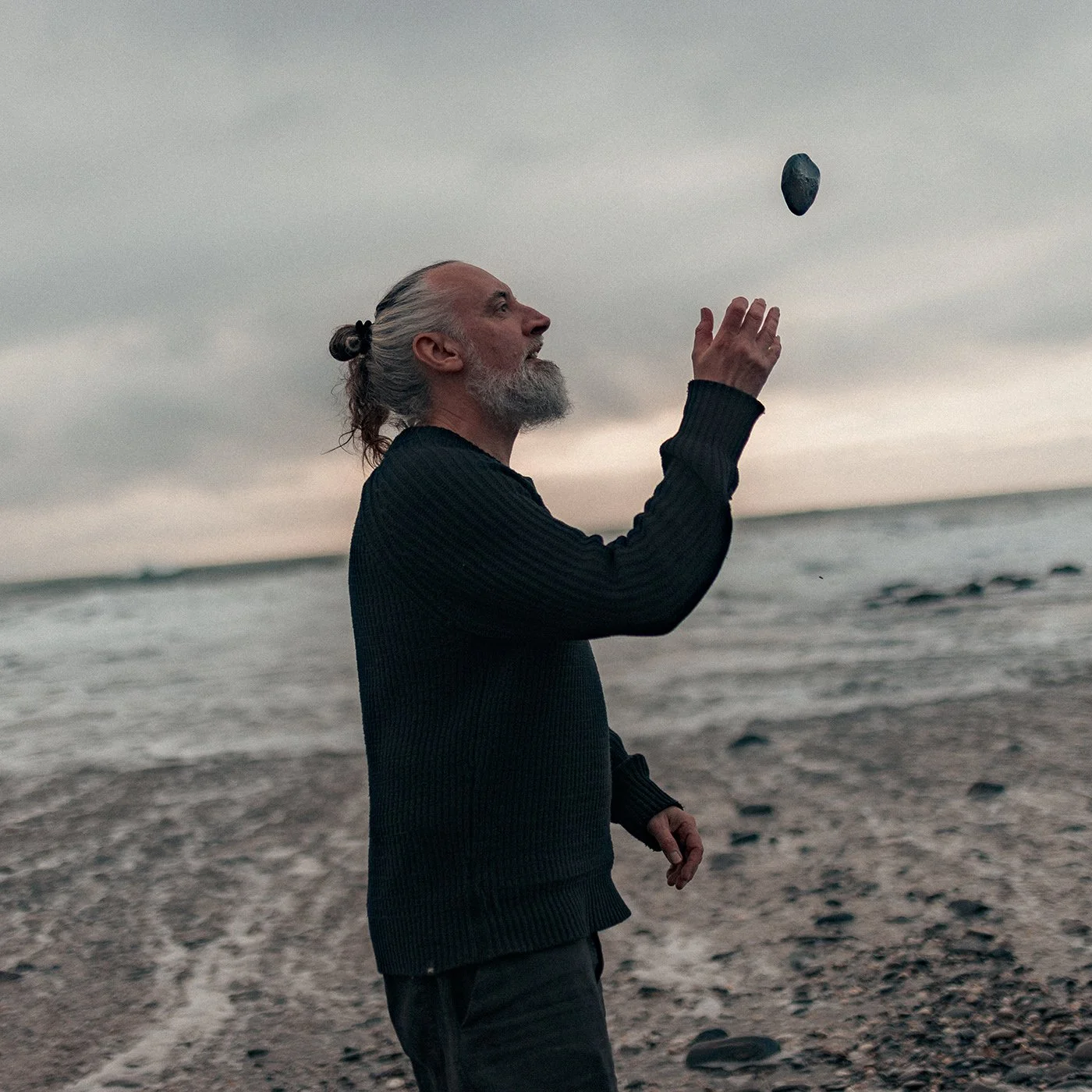
“Spirit of Place” was a track that really stood out and took us by surprise. Could you talk a little about how it came about, both in terms of its conception and its production?
“Spirit of Place”, well there you go. I jacked the title from D. H. Lawrence. He spent a lot of time in Zennor, where the studio is. I was reading one of his books at the time, it was an instrumental piece I wrote for a soundtrack. I pitched it to the director, and I said, ‘There you go mate, done it. All the themes are in here.’ He was really into Last of Us and the beautiful theme from Last of Us, I can't remember the guy's name – he’s a genius, but his theme. And I'm like, ‘Yeah, okay Nial on string guitar, passion, got it, I'm gonna do that. Submerged myself, did this piece for this director, and I said, ‘All the themes are in there. We can extrapolate all these themes,’ and he was like, ‘Nah, not really into it. You got anything more…’ I don’t know what she said.
So, I ended up doing the soundtrack for this documentary, and then this instrumental was sat in my iTunes. One day it was playing in the kitchen, and my wife heard it, and she was like, "Wow, I love this. Why don't you do a whole album like this?’ And I'm like, ‘Well, a whole album where I don't sing, I'll try not to be offended by that, but okay.’ She was like, ‘No, it sounds so… it’s so perfect for this moment,’ she was making dinner and I was reading or something, I don't know, it was a nice moment. So, it enabled me to think, ‘Okay, maybe I can put some instrumentals on this record. and then I can break it up like a folk record,’ like Michael Chapman's fully qualified survivors, broken up with instrumental moments. So, it enabled me to think. ‘Okay, this is going to be on the record, and it's got to fit, it can't be like a Fink record and then an instrumental chucked on the end, it's got to have an atmospheric that fits.’
It’s not perfect, there's a couple of grabs that I miss, but I kept the take because it's got the most vibe and the most energy, and after I finished that take, I was like, ‘This will not get any better,’ I was completely hypnotised during that take. And then we added tiny subconscious traces to that piece from everybody else; so, guy on bass, he adds just one moment and it's lovely, and Timmy on guitar and drums, he adds one moment, it means that we're all in it. And even Sam, the producer, added something as well, just to say, ‘Me too.’ Yeah, I don't know what it means, it's a beautiful… from a technical side, it allowed me to cut a weaker track. We did nine tracks, and this album's eight tracks, that instrumental allowed me to cut the weaker song. The weakest song I wrote didn't make it, and I'm really grateful for “Spirit of Place” for allowing me to do that.
What is the significance of the title The City Is Coming to Erase It All?
Yeah, it comes from a lyric, and we said we weren't going to do a track title album title anymore, but we did - or a lyric title, but we did. There's a lyric on the record that I think is the best lyric on the record, from the track “Memorise Your Senses”. It's the third verse, which I think is the best verse on the record, and it's all about driving back from the studio to my parents' house, to go stay the night at my mum and dad's at night, and the lyrics are, ‘Window down, night air thick with the smell of the fields. You memorise your senses, knowing that the city is coming to erase it all,’ and I've had that feeling so many times in my life, but never been able to put that down on paper, or on record; that feeling of this moment right now is amazing.
“Warm Shadow” was the last time I got close to it. ‘This feeling right now is amazing, and I don't want it to end,’ it’s the warm shadow feeling. And, ‘Memorise your senses,’ is I want to remember this moment, because when I go home I'm gonna have to live off the memory of this moment, when I'm at my apartment and the record store downstairs is having a party, and there's sirens going by, and there's people having fun on a Saturday night, and I'm living in Central Berlin. I'm not going to have the smell of the fields and the night and the air, and the.. And the fact that these, these beautiful, rural, empty places.
I'm working at a recording studio in one of these places that used to be a chapel, so even I'm part of this problem. Sam moved from Abbey Road to Zennor, the city's coming, and you would leave this tiny village where there isn't any street lights, or road markings, and you'd turn onto a street with road markings and street lights, and you'd be like, ‘I'm getting close to civilisation again, and it's trying to capture that… I don't know, I'm not even saying that's a bad thing. I think it's the inevitability of it. Maybe it taps into my studies at university a little bit, where I studied American History, and I did a big specialisation in Native Americans and Plains Indians, and how this westward expansion, obviously hindsight you know, man, there's no way to stop this. It's like Game of Thrones, and the winter is coming; the hordes are coming. There's no magic bullet for this, and it's gonna happen.
When I go to Cornwall, I wish they had a bigger airport, so I could fly there from Berlin. It would take me a couple of hours, instead of driving for nineteen hours, but that will be part of its ruin, the fact that you can get an EasyJet to Newquay from anywhere. I mean, I don't know. It's all of these discussions going on when you go somewhere unspoilt, just you being there is contributing to it being spoilt in a way.
So, that's the tension, I'm celebrating, ‘Man. This is so great here, I fucking love it,’ and I'm also aware that not only is the city literally coming to… maybe this all won't be here in a hundred years, but also me personally, I'm going home, and at some point I will go home, and being in the city will erase the memory of all of this. This moment won't exist anymore for me, so I need to try and imprint it as hard as I can, so that I can cling to it.
I mean, The City Is Coming To Erase It All, it’s for me. I'm gonna go home to the city, and that will erase all of this, but it also absolutely means that beautiful, spoilt, wild places are getting rarer and rarer and rarer, and there's always a reason why they're like that, they're hard to get to, they're difficult to know about.